
Arrest Records in Harford County
The Harford County Sheriff's Office is the main agency that makes arrests and books people into custody. It is the largest sheriff's office in Maryland, led by Sheriff Jeffrey R. Gahler. An arrest record is created at booking. It captures the person's name, the charge, the arrest date, and the booking or custody details. The record begins with law enforcement, not the court.
An arrest record is different from a criminal court record and from a conviction. The arrest is the start. The court record begins when the State files charges, and it ends in a disposition. A conviction is only one possible outcome. Full criminal court history sits on the Harford County court records page; this page leads with the arrest side, including booking, custody, and recent arrests.
Booking and First Appearance in Harford County
After an arrest, a person is taken to the Harford County Detention Center at 1030 Rock Spring Road in Bel Air. The Sheriff's pre-booking policy states that every arrestee must see a District Court Commissioner within 24 hours of arrest. The commissioner reviews the charges and sets initial release terms or a bond.
Intake usually includes a search, a medical and pre-book screening, identity and charge processing, property handling, and classification. The jail opened in 1973 with 100 beds and now holds 820 beds after expansions in 1997 and 2011. The contact block below covers the Detention Center and Sheriff's headquarters.
Harford County Detention Center
1030 Rock Spring Road
Bel Air, MD 21014
410-638-3140
Sheriff's Office Headquarters
45 South Main Street
Bel Air, MD 21014
410-838-6600
How to Search Harford County Arrest Records
There is no single public arrest blotter for the county in the official pages reviewed. Instead, a few official tools work together. The Sheriff points the public to Maryland VINE for custody status. The Maryland Judiciary Case Search shows criminal and traffic cases once charges are filed. A formal criminal history record check runs through the state, not the court.
- Search Maryland VINE by name to confirm current custody at the Detention Center.
- Open Maryland Case Search for the criminal or traffic case once charges are filed.
- Call the Sheriff's Office for booking or custody questions the tools cannot answer.
- Request a state criminal history record check for a complete background result.
A statewide criminal history record is the official background source. The Judiciary says Case Search should not be used for that purpose, and it points users to the state criminal history process run through CJIS and DPSCS.
VINE is free and works by phone or online. You pick Maryland, search by name or ID, and can register for an alert when a custody status changes. It confirms whether a person sits in the Detention Center, but it does not replace the court file for charges, bond, or hearing dates. For those, Case Search and the courthouse file are the better sources.
Arrest Records vs. Criminal Court Records
People often mix these up. An arrest record is made by law enforcement at booking. A criminal court record is made by the court after charges are filed. They hold different information and live in different places. The table sets them side by side.
| Arrest Record | Criminal Court Record | |
|---|---|---|
| Source | Sheriff or police | Court clerk |
| Created When | Booking | Charges filed |
| Contents | Booking info, charge, custody status | Pleadings, motions, disposition |
Charges vs. Convictions
A charge is an accusation. A conviction is the result of a guilty plea or a guilty verdict. The two carry very different weight. A person can be charged and later found not guilty, or have the charge dropped through nolle prosequi. Reading the disposition is the only way to know what happened.
| Charge | Conviction | |
|---|---|---|
| Stage | Accusation | Verdict or plea |
| Burden of Proof | Probable cause | Beyond a reasonable doubt |
| Public Record | Yes, unless restricted | Yes, unless expunged or shielded |
Sealed vs. Expunged Records
Maryland uses both shielding and expungement, and they are not the same. Expungement removes information about a case from court and law-enforcement records. Shielding hides qualifying records from public view and Case Search without fully destroying them. The comparison below shows the difference.
| Shielded | Expunged | |
|---|---|---|
| Visibility | Hidden from public and Case Search | Removed from court and police records |
| Law Enforcement | Limited access kept | Very limited; treated as not public |
| Eligibility | Certain convictions under Criminal Procedure § 10-302 | Many non-conviction outcomes and listed convictions |
The Maryland Judiciary posts a help page on shielding criminal records, with the forms and steps.
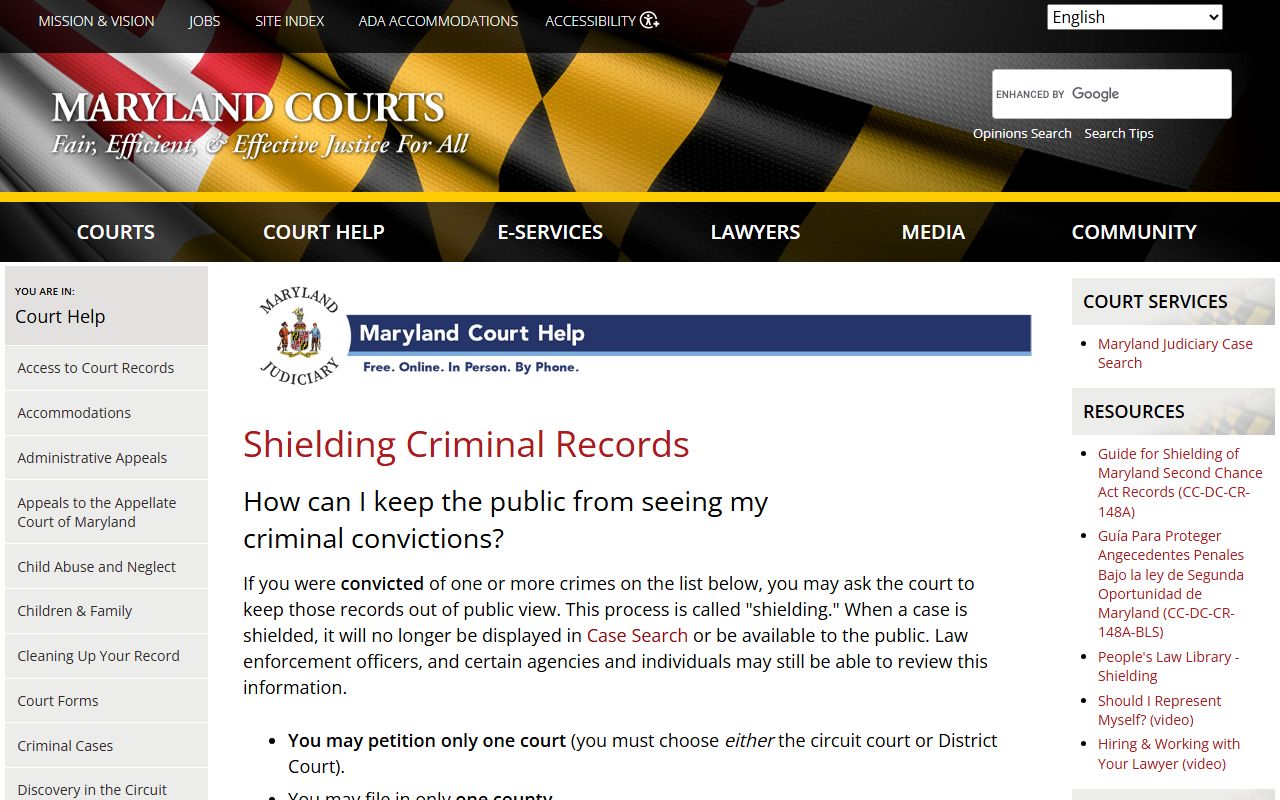
Start with the Judiciary's shielding criminal records guide. Keep your own copies of any order, because copies may not be available once a record is removed.
Expungement and Shielding in Harford County
Whether a record can come off public view depends on the disposition and a waiting period. The State's Attorney receives the petition and may object. If the court grants it, the court and law-enforcement repositories process the change. The statutes below set the rules.
The main expungement statute covers police and court records for many non-conviction outcomes.
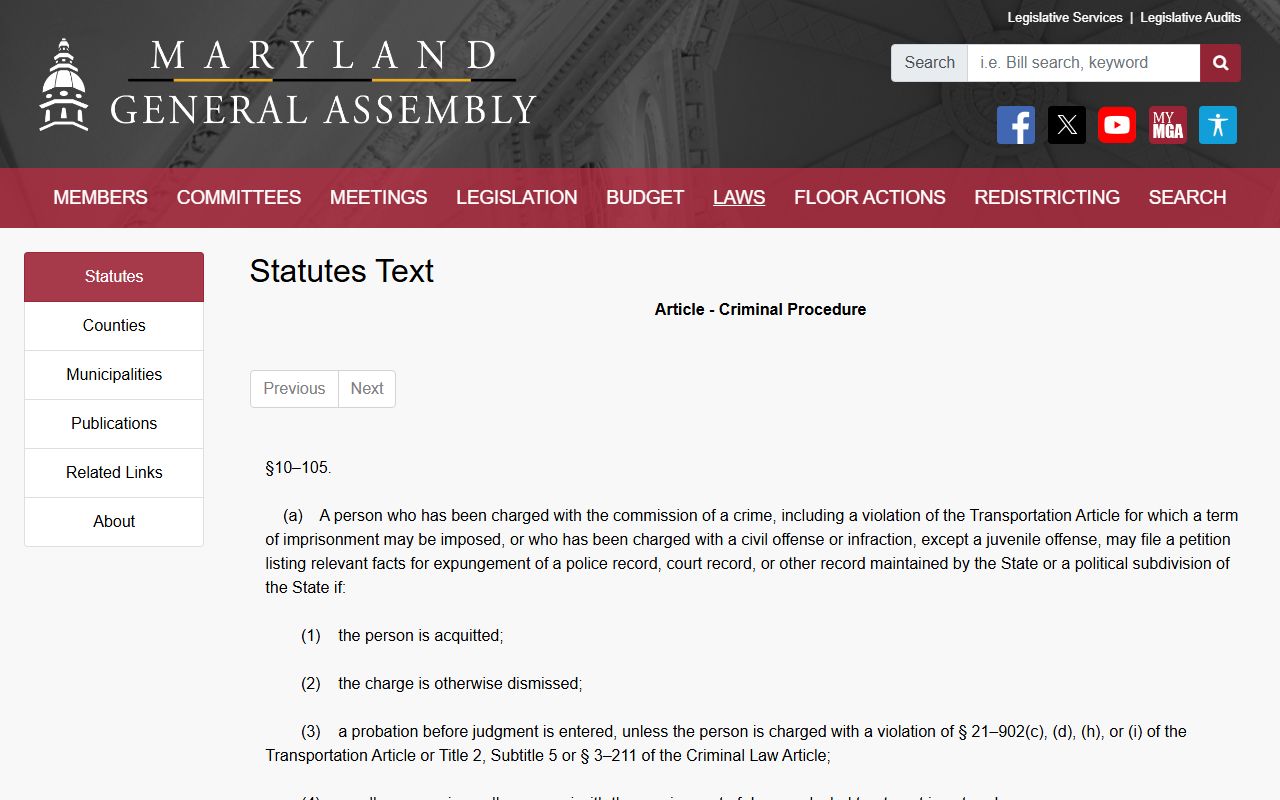
Read Criminal Procedure § 10-105 for the general expungement rules, including stet and compromise timing. A separate statute reaches certain convictions.
The conviction-expungement statute lists offenses that can be expunged after a waiting period.
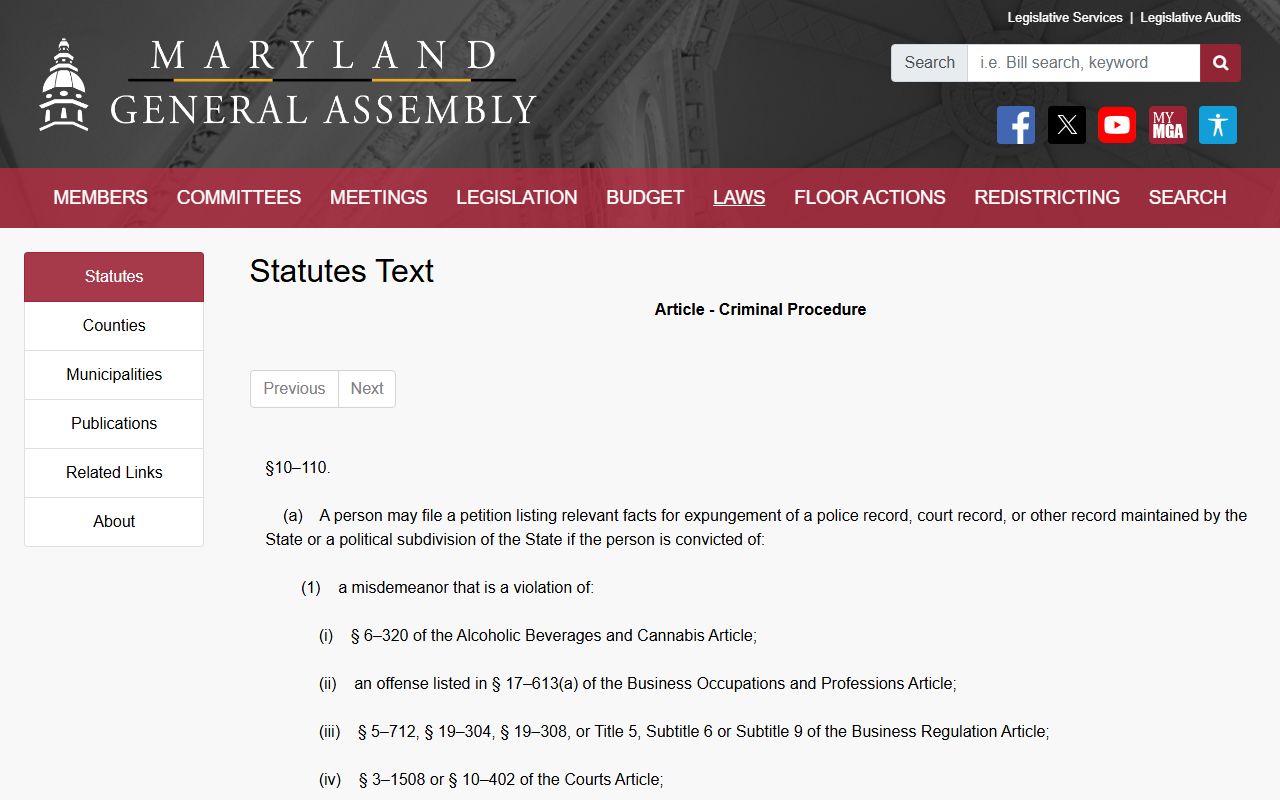
See Criminal Procedure § 10-110 for conviction-expungement paths and conditions. Shielding has its own set of definitions.
Maryland defines shielding terms in a separate statute that frames the whole process.
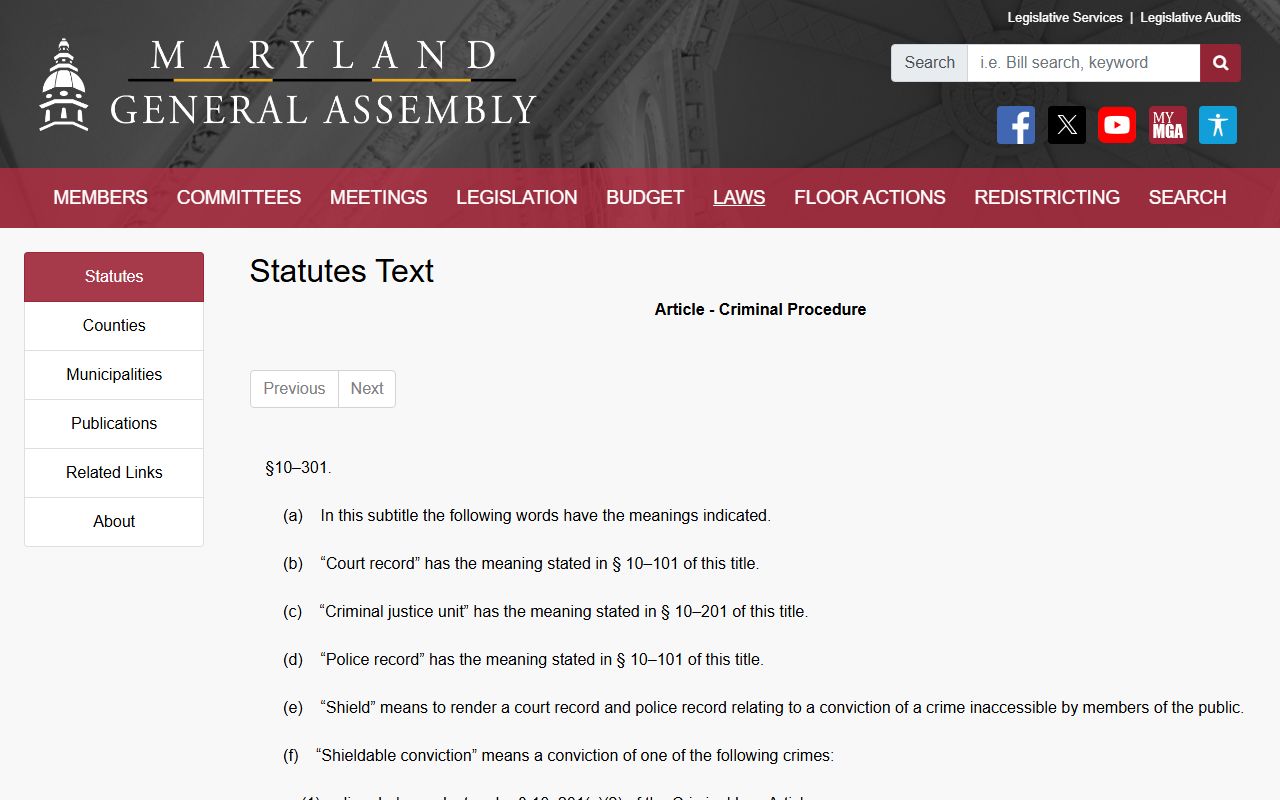
The definitions sit in Criminal Procedure § 10-301. The petition itself runs under the next section.
The shielding petition statute lets qualifying people ask the court to shield certain convictions.
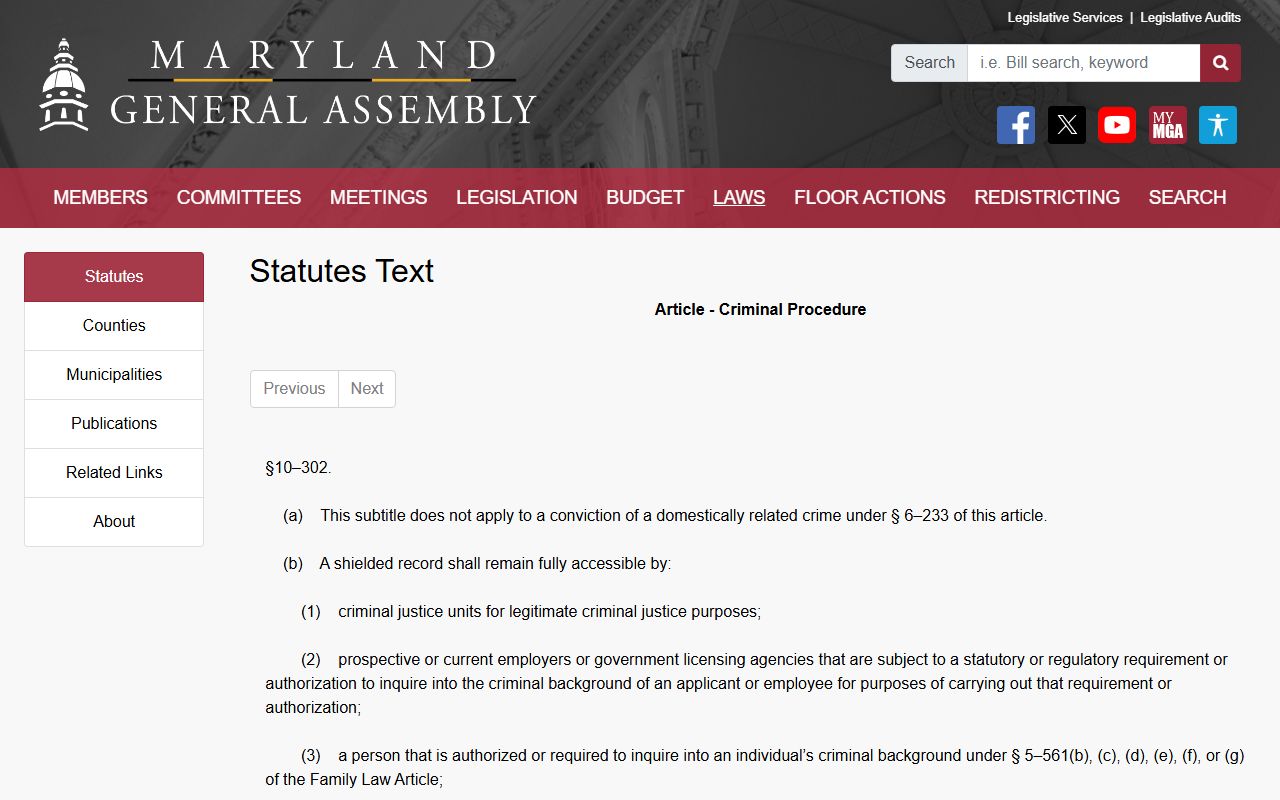
Review Criminal Procedure § 10-302 before filing. Common denial reasons include an ineligible disposition, a waiting period not met, pending charges, or filing in the wrong court.
Mugshots and Booking Photos
A mugshot is a booking photo taken during intake. The Harford County Sheriff's Office does not publish a public mugshot gallery in the official pages reviewed. Booking photos may exist in a case or law-enforcement file, but they are not posted as a roster. Steer clear of third-party mugshot sites, which often charge fees and may show old or wrong data. For custody status, the official VINE tool is the better source.
If you need a booking photo for a real legal reason, ask the Sheriff's Office or the court that holds the case file. Access depends on the record type and whether the case is open or restricted. A photo tied to a juvenile, sealed, or shielded matter is not public, and a paid mugshot site cannot change that.
Statewide Criminal Records Search
For a true background result, Maryland runs a statewide criminal history process through CJIS and DPSCS, not the court. The Judiciary is clear that Case Search is a case-by-case summary and should not stand in for a background check. A formal record check follows state rules on fingerprints, fees, and who may request the report. People with a criminal case who cannot afford a lawyer can apply to the Maryland Office of the Public Defender at opd.state.md.us.
Background Check Considerations
Casual lookups and formal background checks are not the same. An employer or landlord check that affects a decision falls under the federal Fair Credit Reporting Act, which sets strict rules. A quick name search on a public tool does not meet those rules and should not drive a hiring, housing, or credit decision.
Important: This site is not a consumer reporting agency under the FCRA, and its information may not be used for employment, housing, credit, or insurance decisions.
Restricted Criminal Records in Harford County
Some criminal data is closed to the public. Juvenile records involving people under 18 are not public, per the Harford Clerk records page and Maryland access rules. Sealed and shielded records drop off Case Search. Records tied to an open investigation may be withheld. Certain non-conviction outcomes and older cannabis-only cases may no longer show online, even though they can remain open at the courthouse. To view a restricted record, a person usually needs legal authority or a court order.