
What Probate Covers in Harford County
Probate is the legal process of settling a person's estate after death. It confirms a will if there is one, names a personal representative, pays valid debts and claims, and distributes what remains. When there is no will, state law decides who inherits. Harford probate records include wills admitted for probate, petitions, inventories, accountings, claims, and the orders that close an estate.
Two offices share the work. The Register of Wills receives filings, opens estates, keeps the files, and runs the public Estate Search. The Orphans' Court is the probate court that hears contested issues and approves required steps. The Register's office is led by Register Derek K. Hopkins, and it sits apart from the courthouse in Bel Air.
The office is built for service by phone and mail as much as in person. The Register encourages people to call before visiting, since appointments are limited and most needs can be met by phone, email, mail, or online. Estate filings can be mailed or dropped in a locked box in the lobby. This setup helps families handle an estate without taking time off to stand in line.
Probate Terms Defined
Probate uses words that rarely come up elsewhere. A short glossary helps when reading an estate file or a checklist.
- Testator
- A person who makes a will.
- Personal representative
- The person who settles the estate, named in the will as executor or appointed by the court.
- Intestate
- Dying without a valid will, so state law sets who inherits.
- Guardianship
- A court arrangement where one person is named to care for another who cannot care for themselves.
- Conservatorship
- A court arrangement to manage the property or finances of a person who cannot manage their own.
How to Search Harford County Probate Records
The Maryland Register of Wills runs a statewide Estate Search that covers Harford estates. You can search by estate number or by the decedent's name. An estate-number search needs the full 12-character number, with leading zeroes added if it is shorter.
The Estate Search page is the main online entry point for probate records.
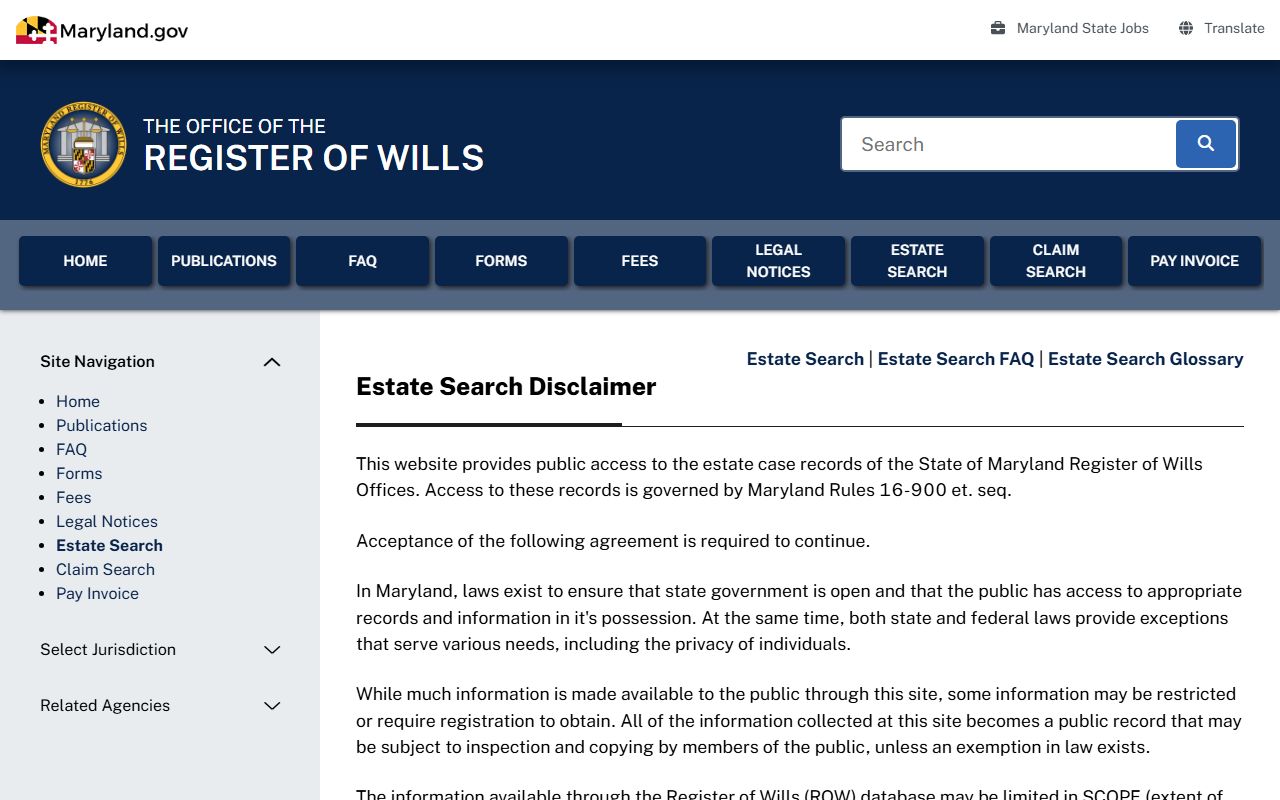
Open the Maryland Estate Search and select Harford County to localize results. The fields below are the common inputs.
| Field Label | Type | Required | Notes |
|---|---|---|---|
| Estate Number | Text | No | Full 12-character number; add leading zeroes if shorter. |
| Decedent Last Name | Text | No | Use a name search when the number is unknown. |
| Decedent First Name | Text | No | Optional narrowing. |
| County | Dropdown | No | Select Harford County. |
A separate Claim Search lets creditors and others look up claims filed against an estate.
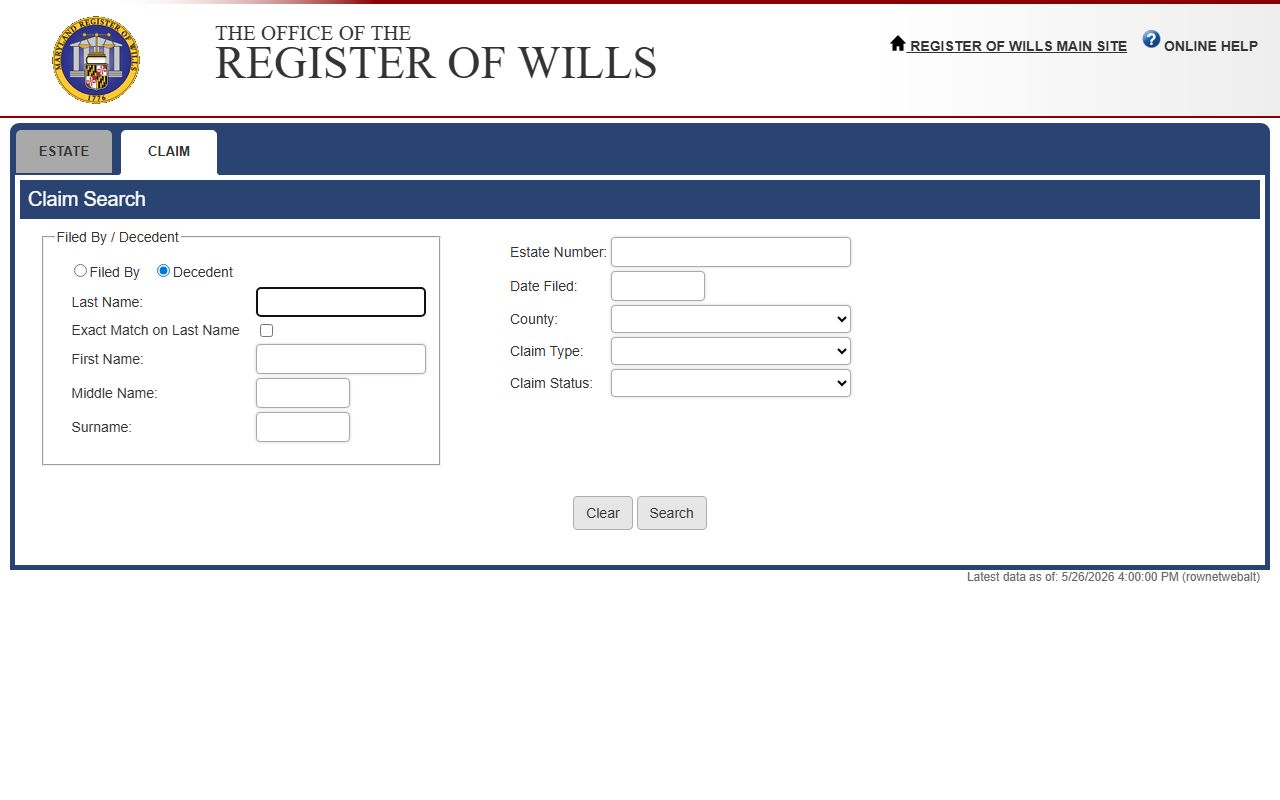
Use the Maryland Claim Search to check claims against an estate. For full file contents, contact the Register's office.
Probate Courts in Harford County
Harford probate ties two offices together. The Orphans' Court meets in the courthouse, while the Register of Wills works from the Mutual Fire Insurance Building on Office Street. The Register's cash registers close at 4:00 p.m., before the office's 4:30 p.m. closing, and a locked drop box in the lobby takes filings. The contact cards below list both offices.
Register of Wills
18 Office Street, 1st Floor
Bel Air, MD 21014
410-638-3275
Mon-Fri 8:30 a.m.-4:30 p.m.
Orphans' Court
Court House, Room 304
20 W. Courtland Street, Bel Air, MD 21014
410-638-3275
Fax 410-893-3177
Opening an Estate in Harford County
The Register encourages people to call before visiting, since appointments are limited and most needs can be handled by phone, email, mail, or online. Absent an emergency, Maryland law does not require opening an estate within a set time after a death. Still, debts, taxes, and property usually push families to start.
The Register posts step-by-step guidance for opening an estate.
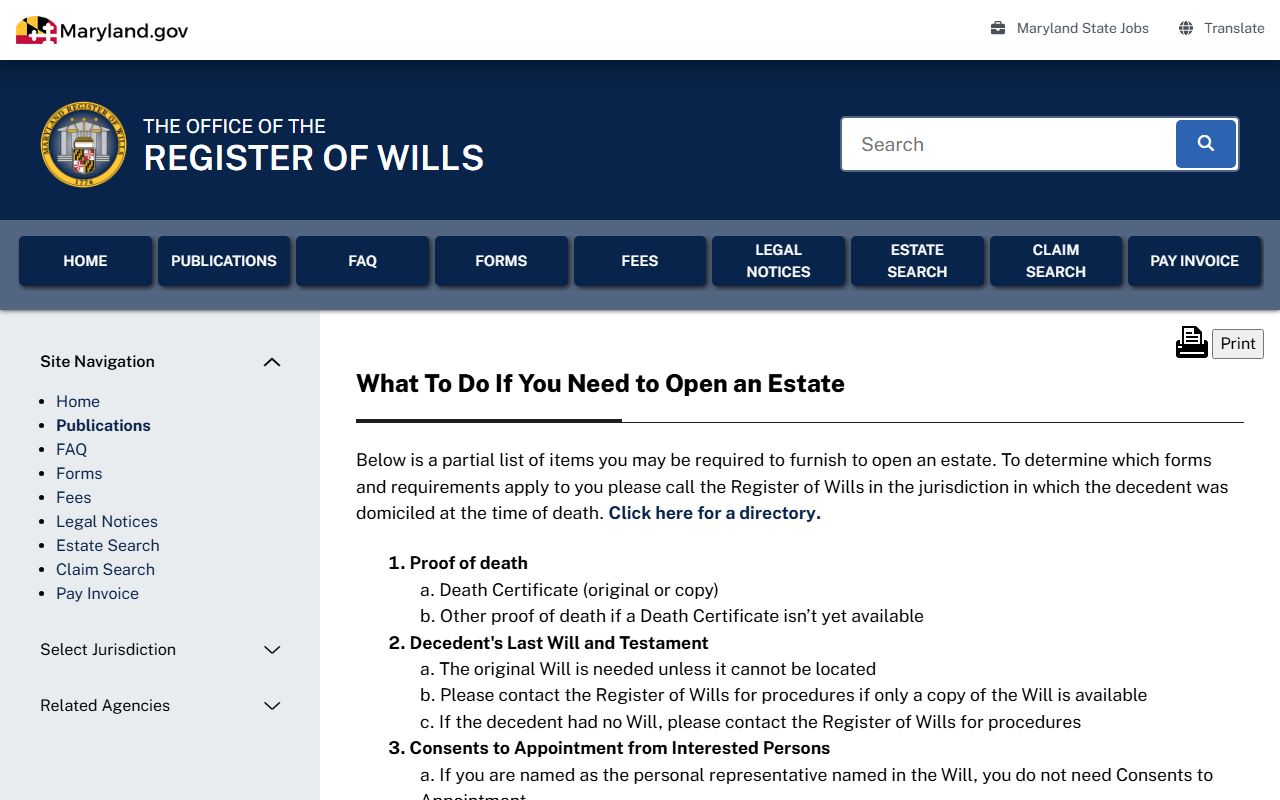
Follow the opening an estate guide before you file. The basic path runs in this order:
- Contact the Harford Register of Wills for guidance.
- Decide whether the estate is small or regular under Maryland thresholds.
- Gather the death certificate, the will if any, and asset and heir information.
- File by mail, drop box, or appointment as directed.
- Receive letters appointing the personal representative if requirements are met.
- Give notice to interested persons and creditors, then file the inventory and accounting.
Small Estates vs. Regular Estates
Maryland sorts estates by value. The Register labels a regular estate as one over $50,000, while a small estate falls at or below that line. The small-estate track is simpler and faster, which matters for families with modest assets.
The Register posts a small-estate guide for estates at or below the threshold.
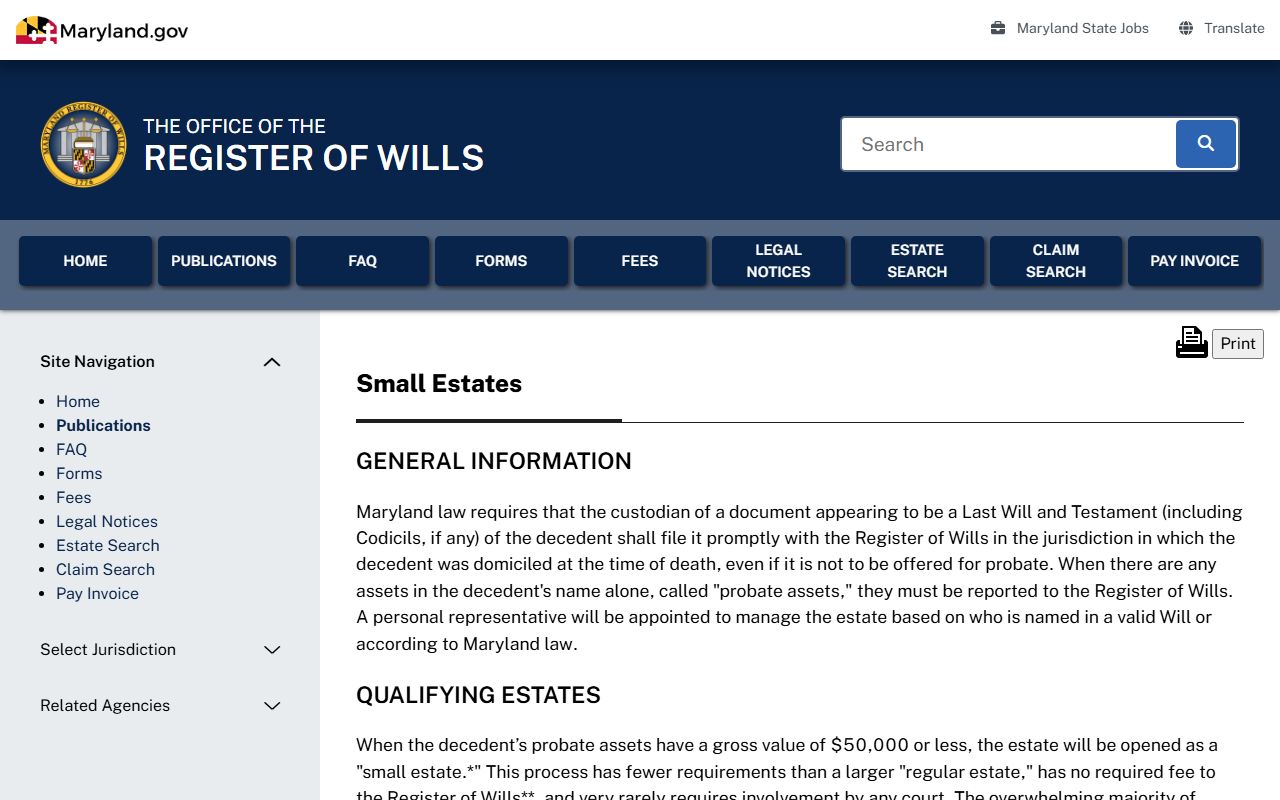
Read the small estate guide to see if an estate qualifies. Larger estates follow the regular administration track.
The regular-estate guide covers estates over the small-estate limit.
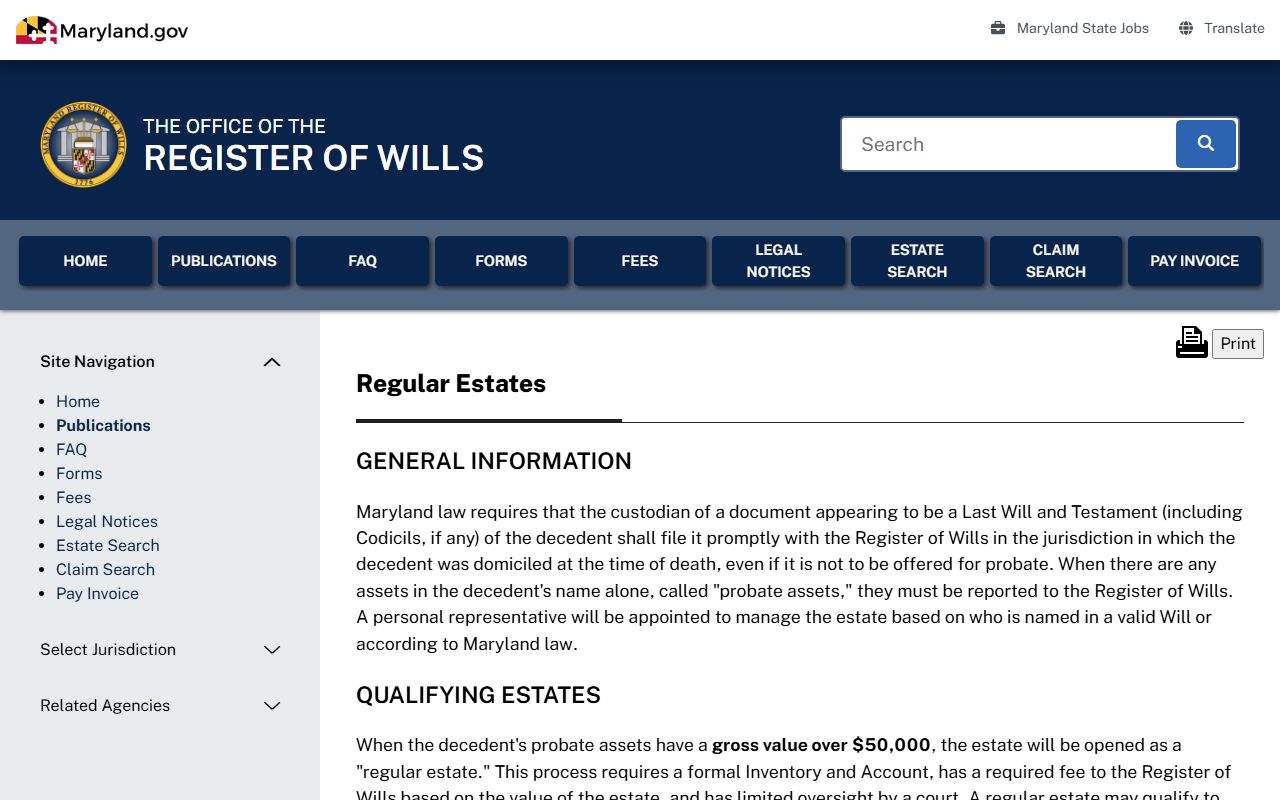
The regular estate guide explains the fuller process, including inventory and accounting steps. The office also offers modified administration for some estates.
Probate Filing Fees
Maryland probate fees are set by the value of the estate, on a graduated scale, rather than a flat amount. Because the figure depends on the estate, confirm the current schedule on the official fees page before you file. The table sums up how the main charges are set.
| Item | How It Is Set |
|---|---|
| Probate fee | Based on the value of the estate, on a graduated scale. |
| Small estate (at or below $50,000) | Lower, simplified charges. |
| Regular estate (over $50,000) | Standard administration fees. |
| Certified copies | Per-page charge set by the Register. |
The Register's fees page lists current amounts and accepted payment.
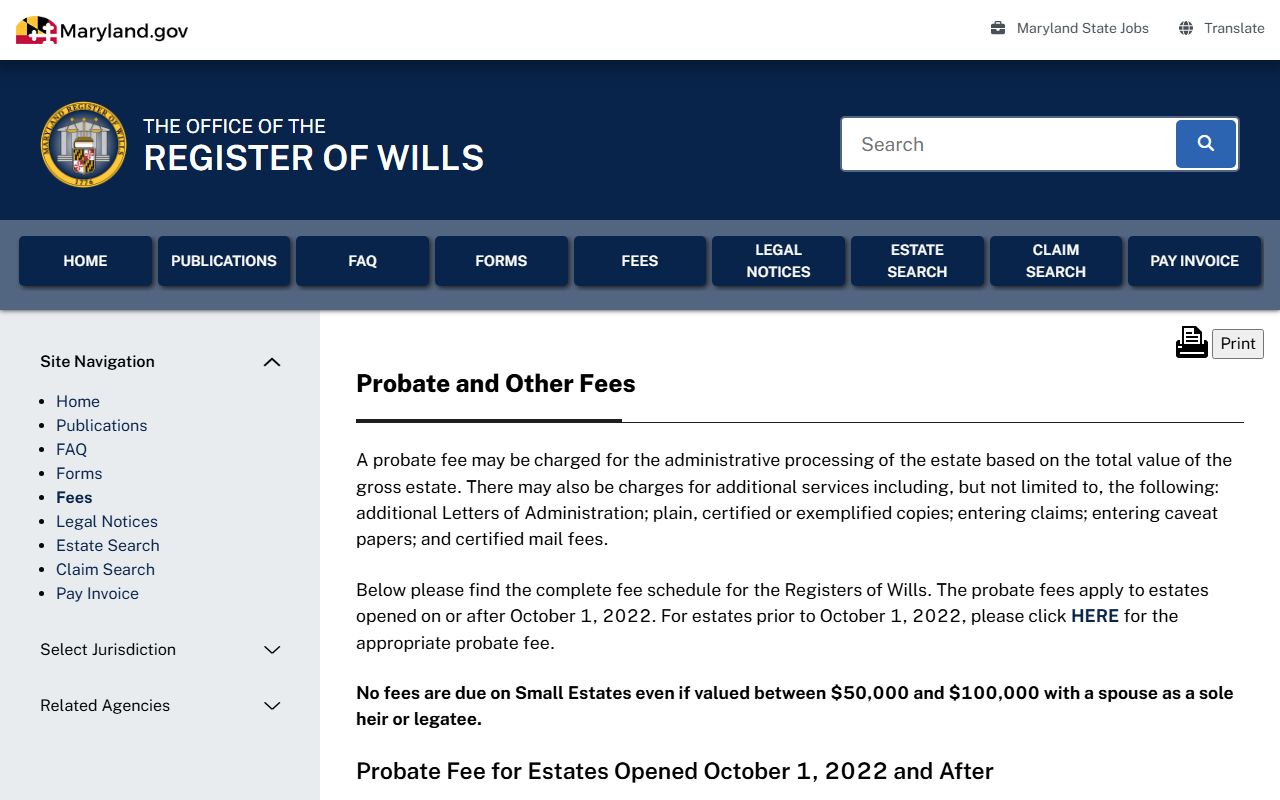
Check the Register of Wills fees page for the current schedule. The office also supports online invoice payment for some charges.
What Harford County Probate Records Show
An estate file builds over the life of the case. Early documents include the petition to open the estate, the will if any, and the order naming a personal representative. As administration moves on, the file gains the inventory of assets, claims filed by creditors, accountings, and the final distribution. The Estate Search summary shows the basics, while the full file and certified copies come from the Register's office. A claim search adds the creditor side, useful when a debt or a lien may touch the estate.
These records serve many uses. Heirs use them to track the estate. Creditors use them to file claims. Title companies and buyers use them to confirm how property passed. The Register's office also links to state publications on wills, opening an estate, and modified administration, which help people who are new to the process understand what each filing means.
Restricted Probate Records
Most probate filings are open, but not all. Guardianship matters, especially those involving minors or an alleged disabled adult, can be restricted. Physician reports about a person's medical condition and guardian reports about property are not open without authority. Mental health and other sensitive filings may be sealed. A person who needs a restricted record usually must show legal standing or get a court order. The Register cannot give legal advice, so a contested or sealed matter may need a lawyer or the Orphans' Court.