
Maryland Public Information Act
The Maryland Public Information Act, or PIA, gives the public a broad right to see government records. It applies to administrative records held by state and local agencies. Court records follow a separate set of rules, the Maryland Rules on Access to Judicial Records, but the idea is the same: records are open unless a law limits access. The PIA defines key terms like custodian, applicant, and public record.
The act starts with definitions that frame the whole process.
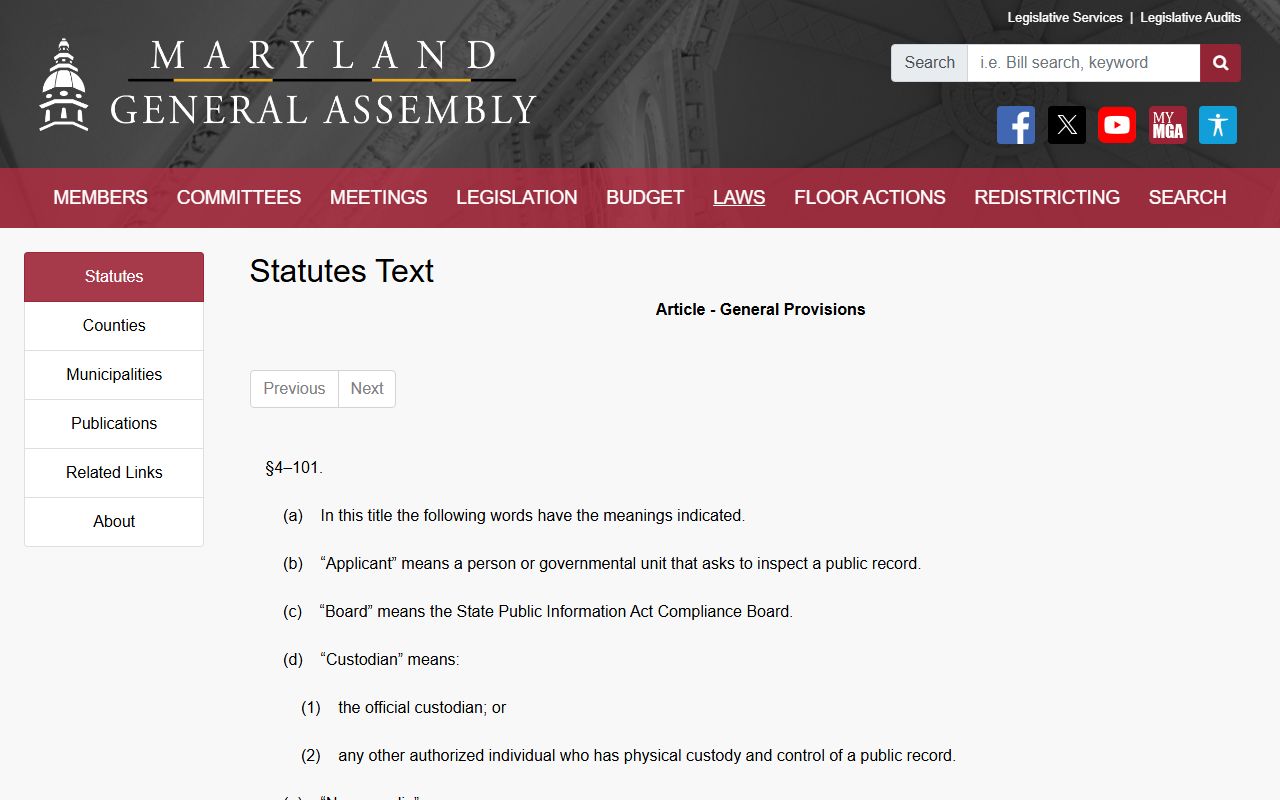
The definitions sit in General Provisions § 4-101. The core right to inspect comes next.
The general right of inspection is the heart of the act.
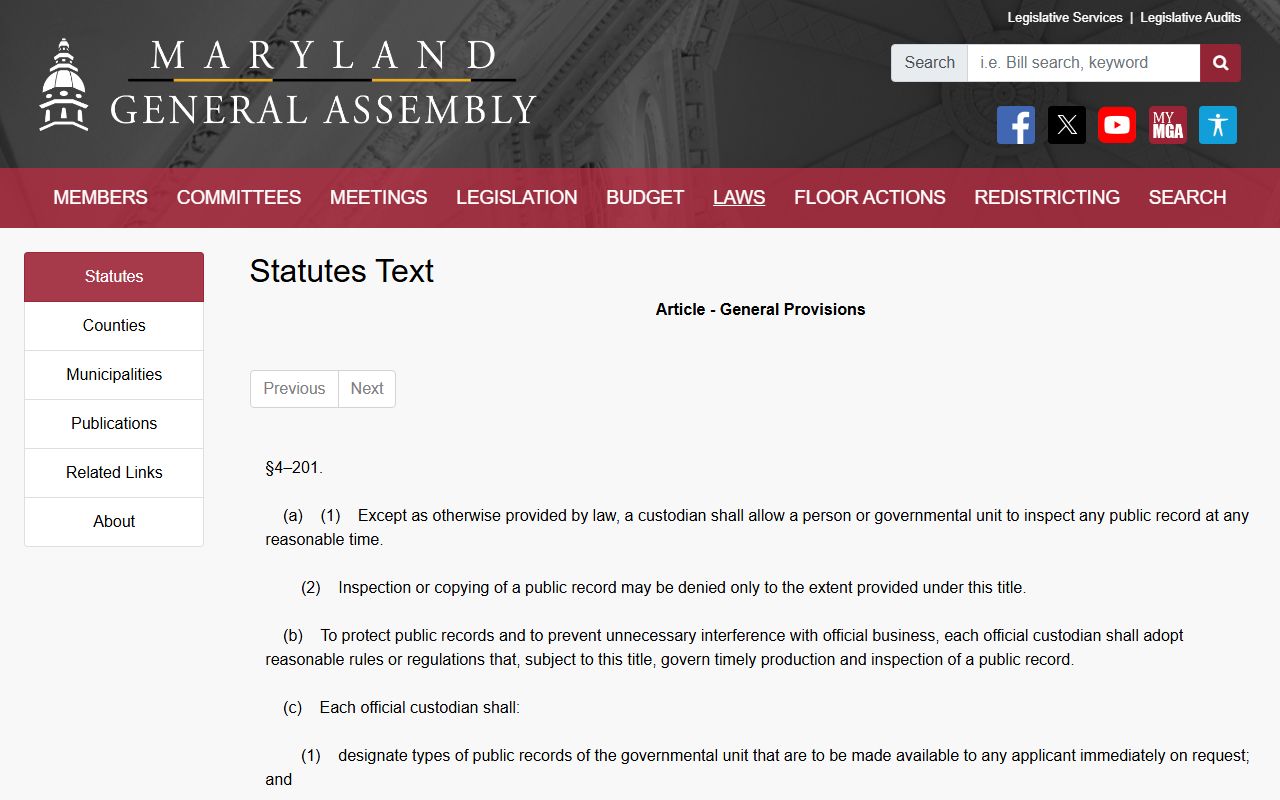
That right is set in General Provisions § 4-201, which lets a person inspect public records unless the law restricts access. Anyone may make a request; you do not have to say why.
The split between the two systems matters because it decides where a request goes. Court files run under the judicial-record rules, mainly Rule 16-901 and the rules after it. Agency records, such as county department files, run under the PIA. The comparison below shows the difference at a glance.
| Point | Judicial Records | Agency Records |
|---|---|---|
| Governed by | Maryland Rules 16-901 et seq. | Public Information Act |
| Held by | Clerk and the courts | State and local agencies |
| How to request | Custodian, in writing or in person | PIA request to the agency |
| Online tool | Maryland Case Search | Agency website or portal |
What Records the County Clerk Maintains
The Clerk of the Circuit Court keeps a deep set of permanent public records beyond active court cases. These records reach back generations, with land records available from 1773 to today. The clerk also handles licensing and notice filings that the public often needs.
- Land records - deeds, mortgages, liens, easements, and long-term leases.
- Court case files - civil, criminal, and family matters in the Circuit Court.
- Marriage licenses - issued and recorded through the Licensing Department.
- Plats - subdivision and survey plats through the state Plats.net system.
- Business and notary filings - business licenses, notary commissions, and authentications.
Land records carry real depth. The Harford clerk holds deeds, mortgages, and liens going back to 1773, and document images are available through the free MdLandRec system with a quick account. Subdivision and survey plats run through the state Plats.net system. Estate files sit with the Register of Wills, and many agency records sit with county government departments rather than the clerk, so a request for a county budget or a department file goes to that agency under the PIA.
How to File a Public Records Request in Harford County
Start by finding the office that holds the record. A deed or court file goes to the clerk. An agency record goes to that agency. A PIA request can be made in writing, and a judicial-record request can go to the custodian in writing or in person during open hours.
- Identify the office that holds the record you want.
- Describe the records clearly, with names, dates, or a case number.
- Submit the request by mail, email, or in person to that office.
- Wait for the response within the statutory timeframe.
- Pay any allowed fees, then receive the records or a written explanation.
A clear, narrow request is easier to fill and usually costs less. The clerk cannot give legal advice, so a question about meaning may need a lawyer or a court help center.
Keep a copy of what you send and the date you sent it. If a request is broad, the office may ask you to narrow it or may quote a fee before it starts. Responding quickly to those questions keeps the request moving. For court files, you can also use Maryland Case Search first, then ask the clerk only for the documents you still need.
Public Records Request Form Fields
Whether you use an agency form or a plain letter, include the same basics. The table lists the fields a request should carry.
| Field | Required | Notes |
|---|---|---|
| Requester Name | Yes | Your name and contact information for the response. |
| Description of Records | Yes | Be specific; add names, dates, or a case number. |
| Date Range | No | Narrows the search and can lower the fee. |
| Format Preference | No | Paper, electronic, or inspection in person. |
Response Timelines
The PIA sets time limits on agency responses. An agency must respond promptly and within the statutory window, and a denial must explain the reason and the remedies. If more time is needed, the law allows a limited extension with notice to the requester.
The timing and denial rules are spelled out in the statute.
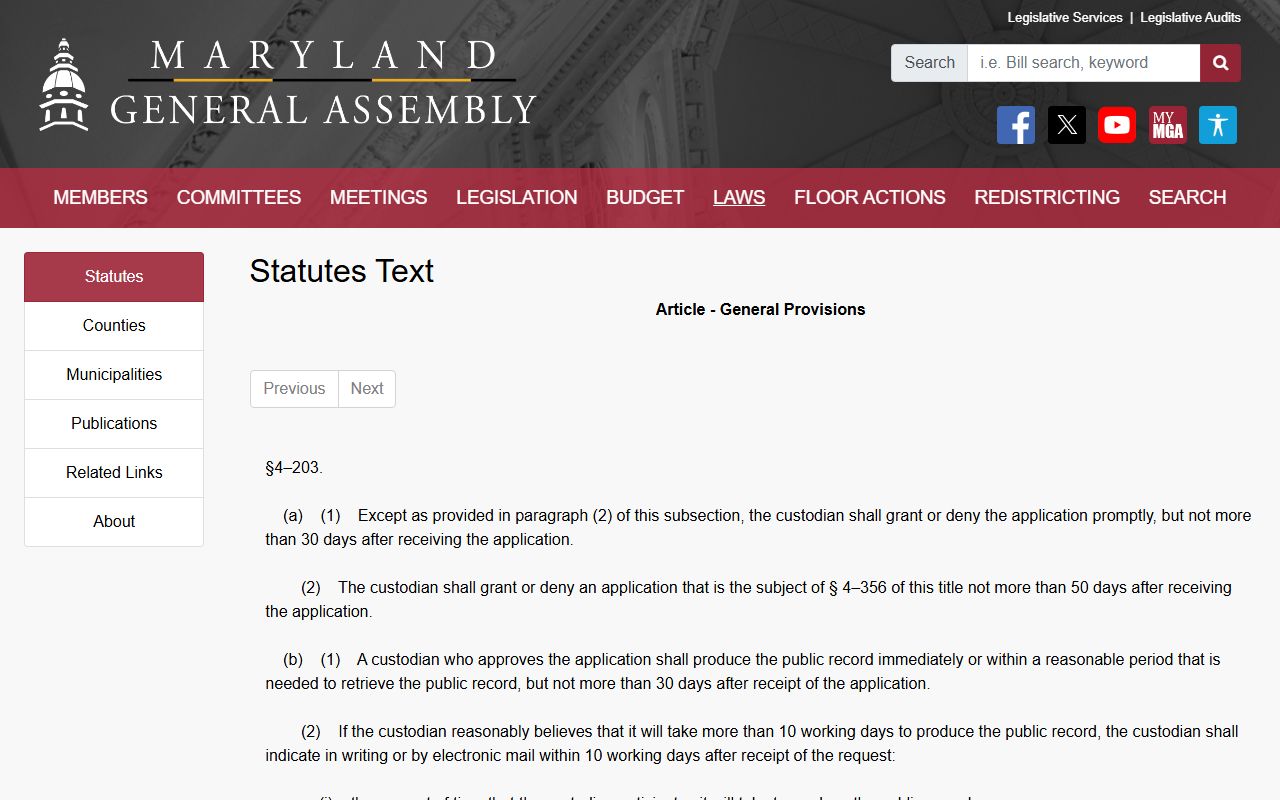
Read the timing rules at General Provisions § 4-203. A written denial should point to the legal basis and the steps to challenge it.
Public Records Fees in Harford County
Fees depend on the record and the office. The PIA allows reasonable fees for search, preparation, and copying, and a waiver may apply when a request serves the public interest. Court copy fees from the clerk are set rates. The table shows how the main charges work.
| Item | Amount or Basis |
|---|---|
| Court record copy, per page | $0.50 |
| Certification | $5.00 plus $0.50 per page |
| PIA search and preparation | Reasonable fee allowed under § 4-206 |
| Fee waiver | Possible when in the public interest |
The fee rules are set by statute.
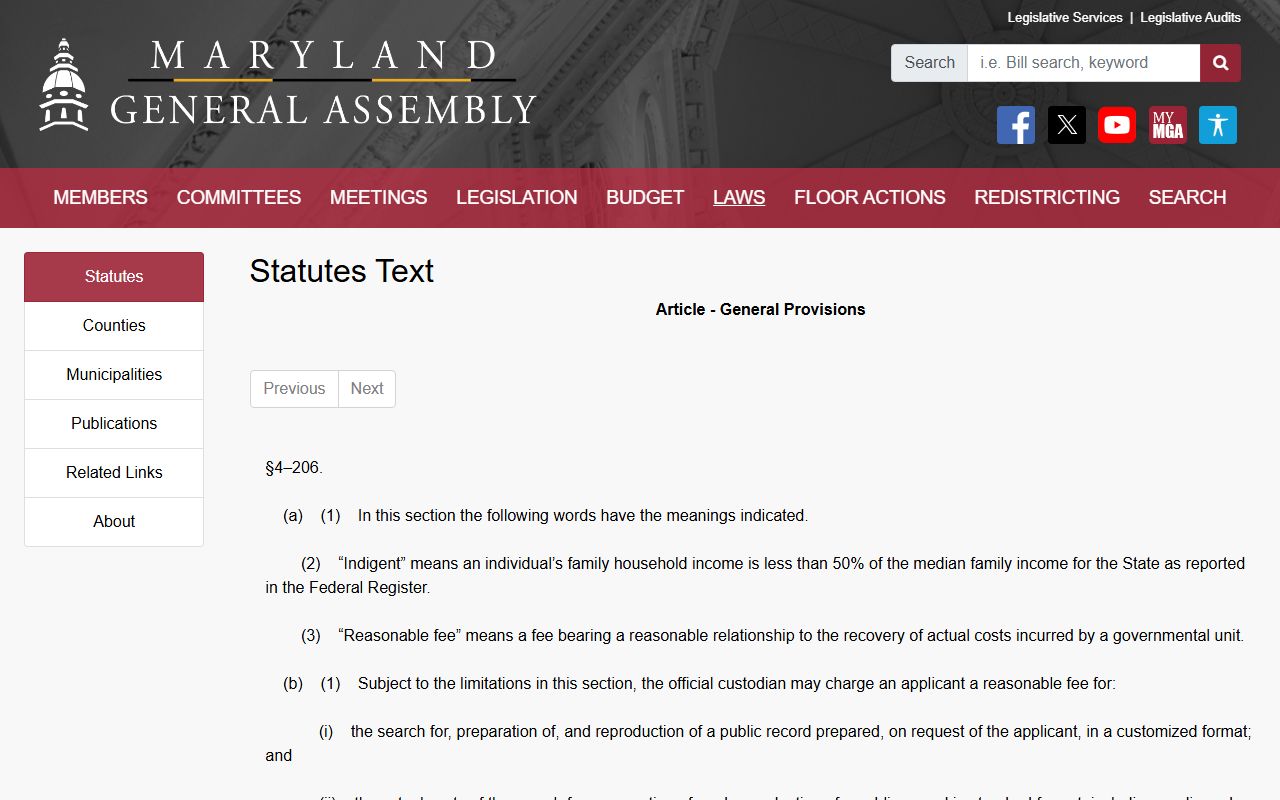
The fee provisions appear in General Provisions § 4-206. Ask about the likely cost before a large request so there are no surprises.
Records That Are Exempt
Not every record is open. The law shields several categories from public view. Adoption, juvenile, and CINA records are closed. Income tax returns, support-case financial statements, certain medical and guardianship reports, and sealed or shielded court records are restricted. Recorded military discharges, while on file with the clerk, are not public. An agency may also withhold parts of a record, such as Social Security numbers or financial account data, while releasing the rest.
This partial-release approach is common. Rather than deny a whole record, an office may redact the protected fields and hand over the rest. If a custodian decides a judicial record is confidential, Maryland Rule review procedures apply, and the clerk may refer the matter to an administrative judge for a decision.
If Your Request Is Denied
A denial is not the end of the road. The agency must give a written reason and explain how to challenge the decision. Maryland also offers help understanding the PIA and resolving disputes. The Maryland Attorney General keeps a plain-language guide to the act.
The Attorney General's PIA FAQ answers common questions about access and appeals.
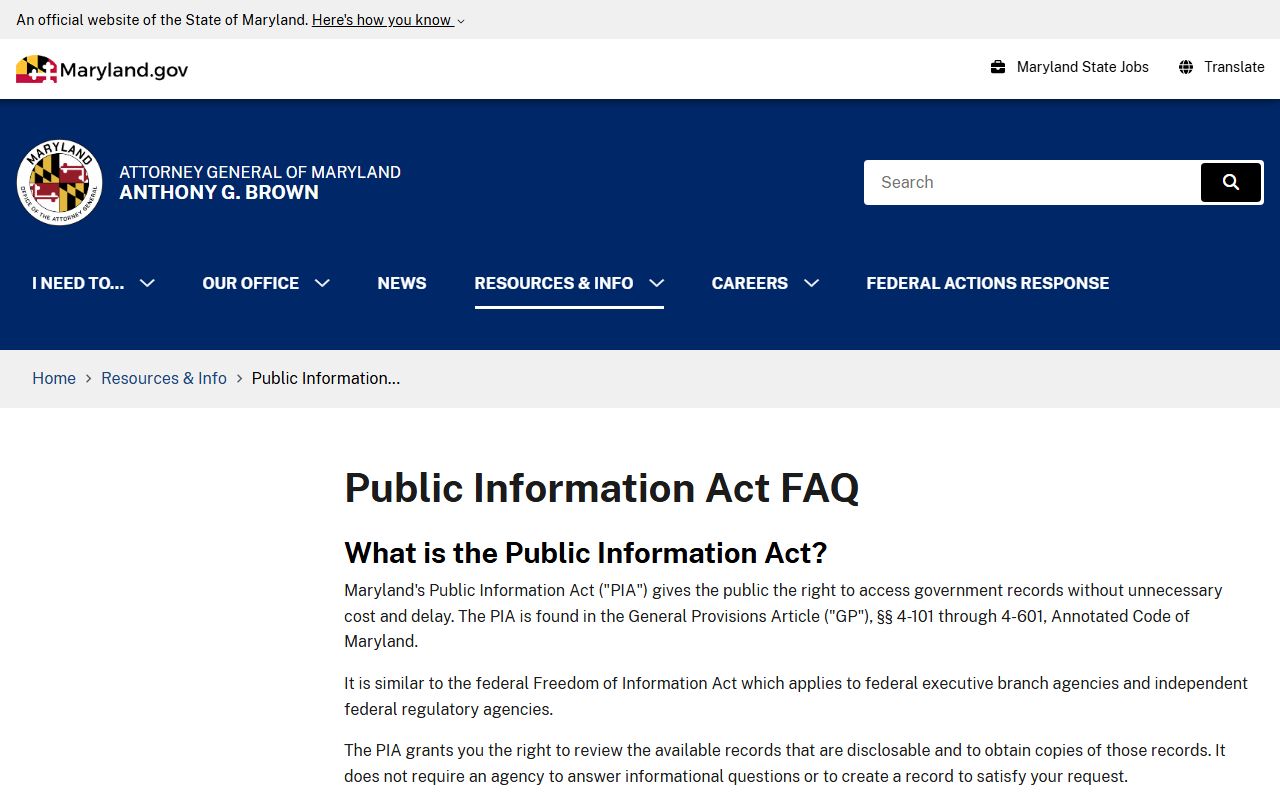
Review the Maryland Attorney General PIA FAQ for the dispute process, including the Public Information Act Compliance Board and the path to court review. For a judicial record, the clerk may refer a confidentiality question to an administrative judge.